80% safety delete - Genius or Folly?

SuperTrooper

Well-known member
Gold Member
Joined
May 6, 2026
Messages
167
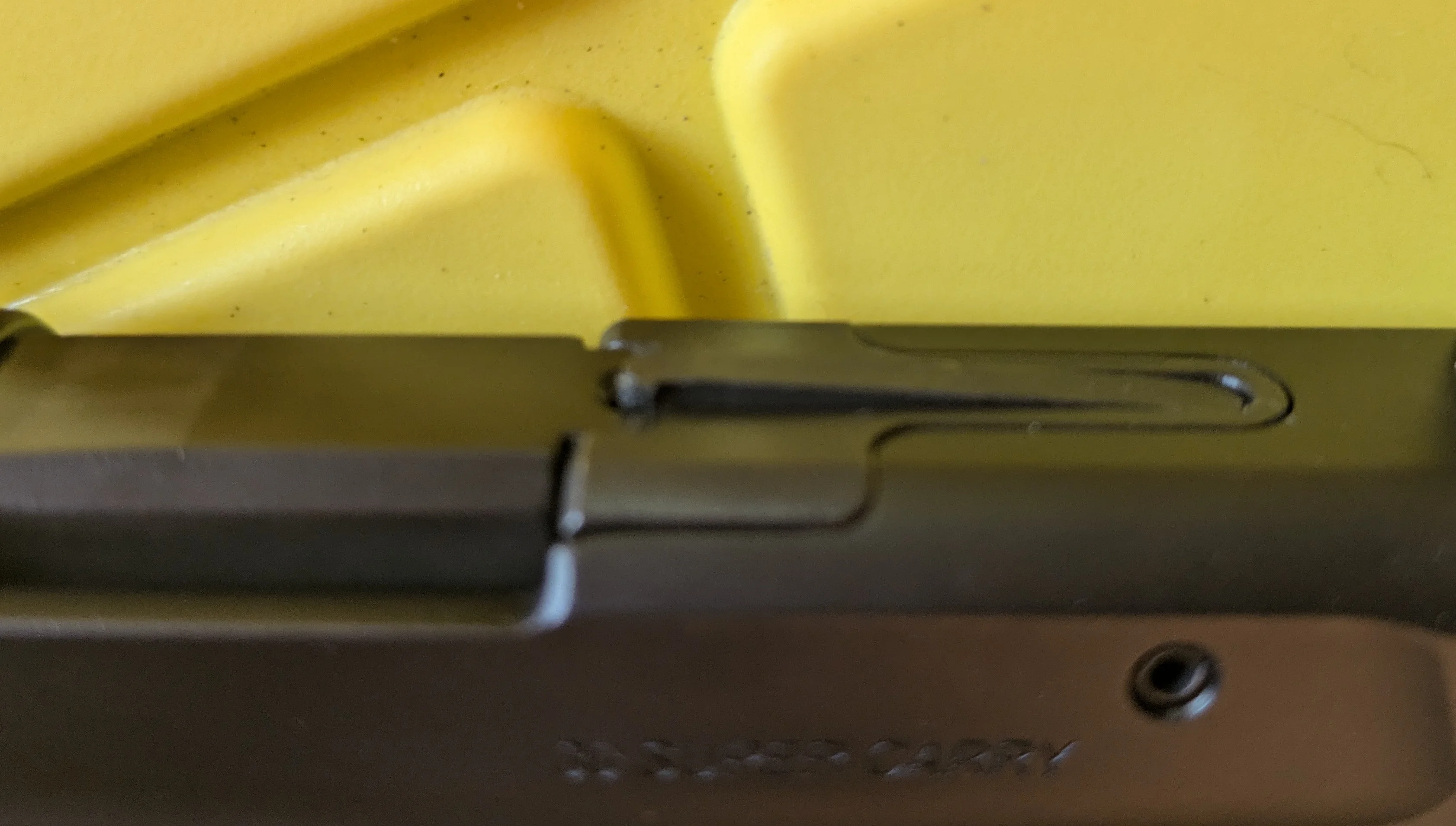
My son's S&W M&P-30 Shield EZ has seen its share of improvements, but none addressed it's horrible bottom hinged grip safety. It shoots great, it's actually quite accurate BUT in its stock configuration the atrocious bottom hinged grip safety makes shooting it a hit and miss situation, as without an absolutely perfect (and super firm) grip she won't fire. They make an improved grip safety for the 9mm EZ, but the .380, and .30 Super Carry is a different size, so it won't help. There is a performance center version of the .380 EZ, but replacement parts seem to be made of unobtanium. Some folks have disabled the grip safety all together, but it appears that makes the gun unsafe to drop. Hence my solution, I installed a grip sleeve that doesn't completely depress the safety, but the additional force of gripping it moves it that last 20%. Have I 'FIXED' it, or made it a dangerous deathtrap?
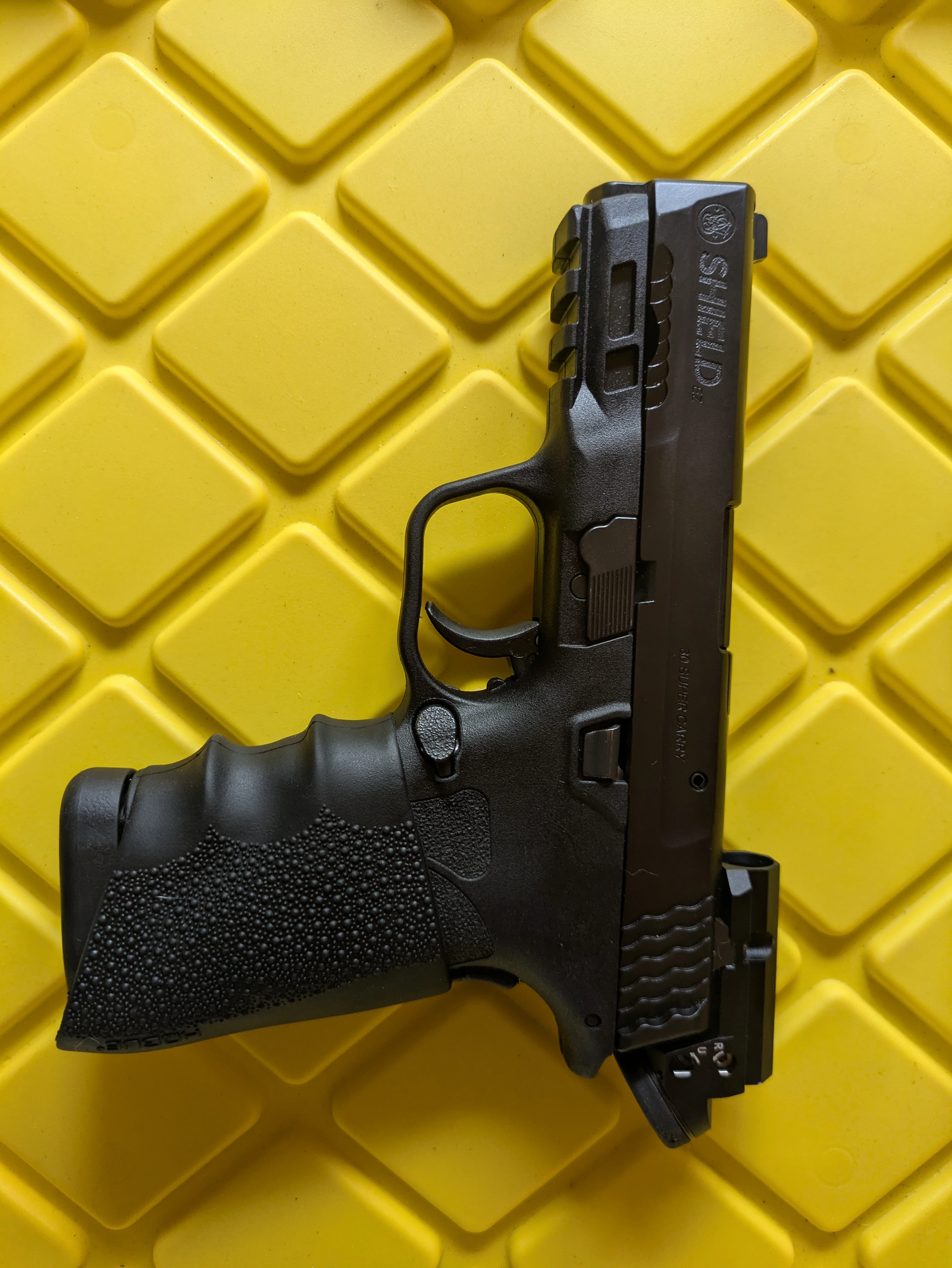
 

Attachments

  • PXL_20260508_175453529.webp
    PXL_20260508_175453529.webp
    1.2 MB
Have I 'FIXED' it, or made it a dangerous deathtrap?
This will depend on exactly WHAT the grip safety does specifically? Is there a FP block that is moved out of the way by squeezing it or do something entirely different such as engage a sear when squeezed?

IF it does nothing more than remove a FP block then it is possible you may have NOT turned it into a 'deathtrap' because MOST semi autos that have a floating firing pin rely on momentum to strike the primer. While it IS possible for them to fire IF dropped it would have to land squarely on the rear of the frame (or the hammer IF a hammer gun) to even potentially create enough movement to sent the FP forward AND hard enough to detonate the primer which with MOST guns while this IS a possibility it is highly unlikely.

Example - MY CZ 75 has the FB block and is VERY easy to remove (which I did) to improve the trigger. So, while I have potentially removed ANY chance it can NEVER drop fire I am OK with this as my chances OF dropping the gun are MINIMAL as well as that of it hitting the hammer and even then firing.

SO you MIGHT want to look into it and see EXACTLY what the grip safety affects with regard to firing operation.
 
This will depend on exactly WHAT the grip safety does specifically? Is there a FP block that is moved out of the way by squeezing it or do something entirely different such as engage a sear when squeezed?

IF it does nothing more than remove a FP block then it is possible you may have NOT turned it into a 'deathtrap' because MOST semi autos that have a floating firing pin rely on momentum to strike the primer. While it IS possible for them to fire IF dropped it would have to land squarely on the rear of the frame (or the hammer IF a hammer gun) to even potentially create enough movement to sent the FP forward AND hard enough to detonate the primer which with MOST guns while this IS a possibility it is highly unlikely.

Example - MY CZ 75 has the FB block and is VERY easy to remove (which I did) to improve the trigger. So, while I have potentially removed ANY chance it can NEVER drop fire I am OK with this as my chances OF dropping the gun are MINIMAL as well as that of it hitting the hammer and even then firing.

SO you MIGHT want to look into it and see EXACTLY what the grip safety affects with regard to firing operation.
It disengages the hammer block for the internal hammer.
 
It disengages the hammer block for the internal hammer.
In this case I would say you have probably reduced the safety aspect of it DRAMATICALLY by using the grip sleeve to partially depress the safety - especially IF the INTERNAL hammer is cocked (or partially so) in this particular gun AND even if you estimate it still has approx. 20% disengagement.

If it were an exposed hammer gun you would know if the hammer is cocked or not - and if NOT well then the possibility of a drop fire (with the FB block removed) would be minimal.

This is a MAJOR reason why I do NOT own any internal hammer semi auto guns.

There is a similar issue with the Series 80 1911s that have the firing pin safety as opposed to the Series 70 versions and many use the aftermarket parts to eliminate the safety to improve the trigger.

I HAVE a Series 80 1911 however I have done a lot of work on the trigger and related parts and have mine VERY close to that of a Series 70 trigger so I have left it as is.
 
Last edited:
In this case I would say you have probably reduced the safety aspect of it DRAMATICALLY by using the grip sleeve to partially depress the safety - especially IF the INTERNAL hammer is cocked (or partially so) in this particular gun AND even if you estimate it still has approx. 20% disengagement.

If it were an exposed hammer gun you would know if the hammer is cocked or not - and if NOT well then the possibility of a drop fire (with the FB block removed) would be minimal.

This is a MAJOR reason why I do NOT own any internal hammer semi auto guns.

There is a similar issue with the Series 80 1911s that have the firing pin safety as opposed to the Series 70 versions and many use the aftermarket parts to eliminate the safety to improve the trigger.

I HAVE a Series 80 1911 however I have done a lot of work on the trigger and related parts and have mine VERY close to that of a Series 70 trigger so I have left it as is.
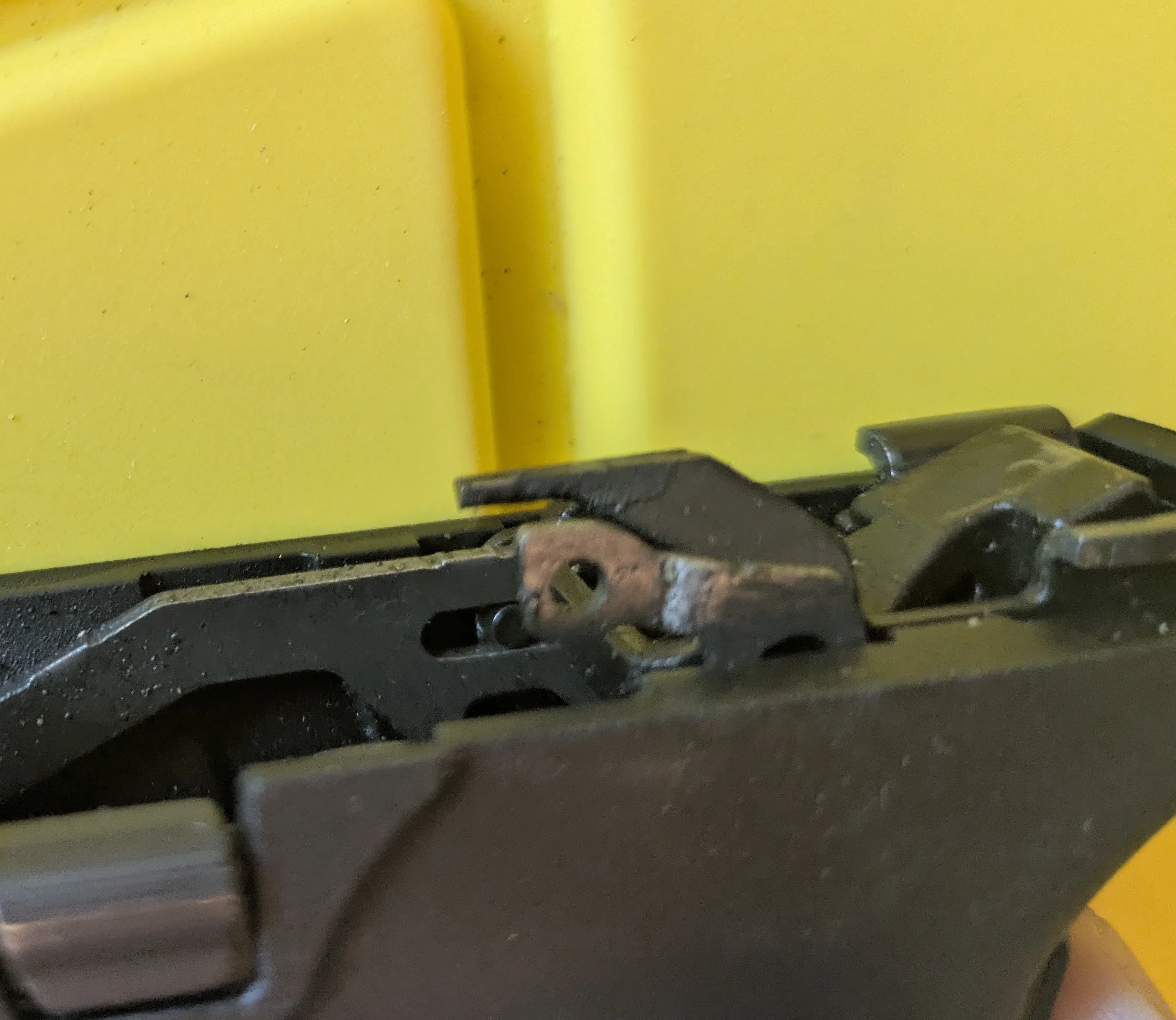
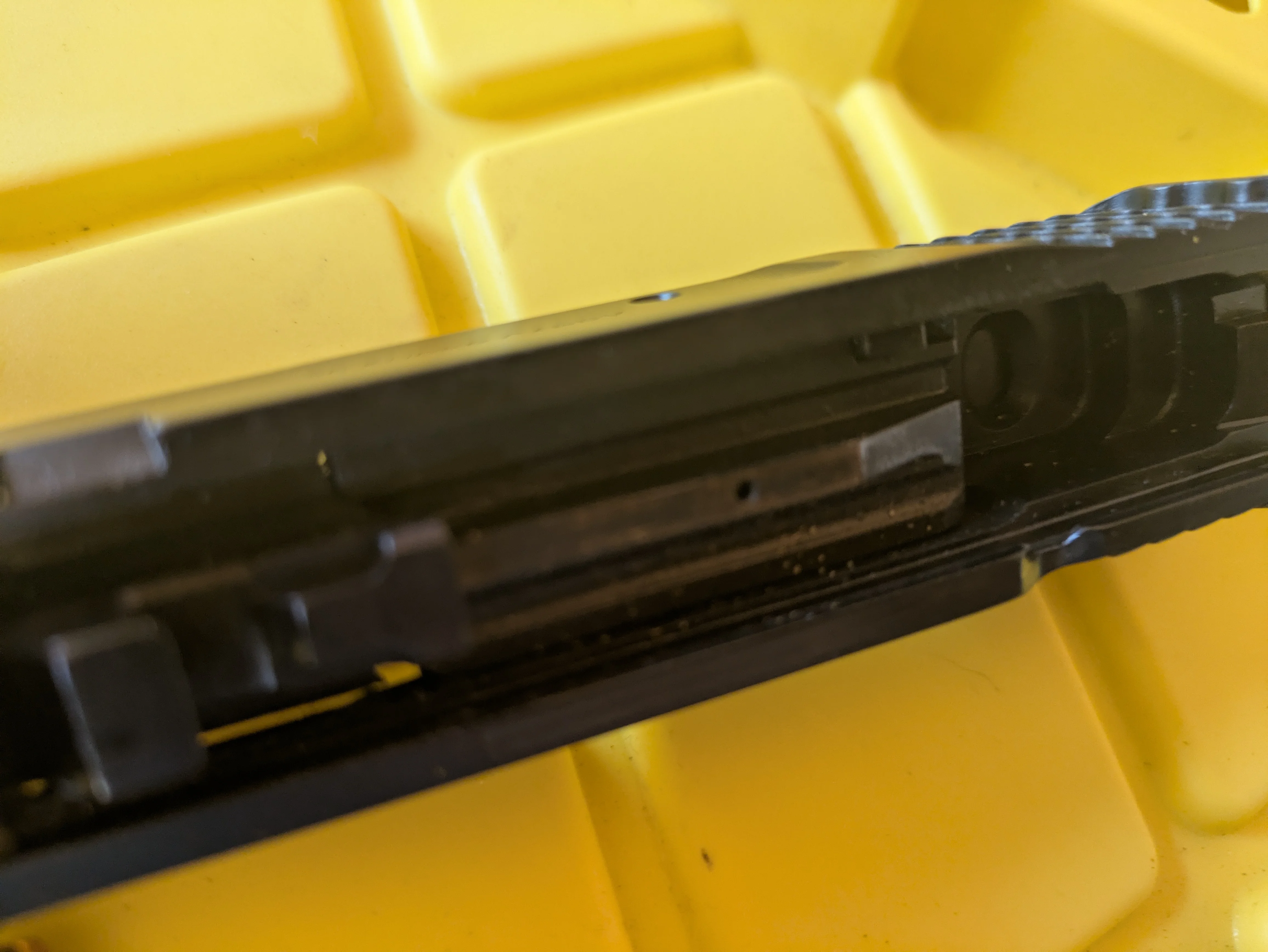
It has a visual, tactile LCI. It is single action only so if a round is chambered the hammer is cocked. The safety bar extends upwards when the grip safety is pressed, and contacts the firing pin block on the bottom of the slide, and apparently also releases whatever is keeping the trigger from also being pulled. Of note the weapon cannot be field stripped with the grip safety depressed, which makes me seriously suspicious of anyone who suggested pinning the safety. The safety bar is slightly elevated with the sleeve in place, but it isn't near the mating firing pin block disconnect, and will not engage the trigger, or fire without additional pressure on the grip.
 

Attachments

  • PXL_20260508_231756616.MP~2.webp
    PXL_20260508_231756616.MP~2.webp
    484.9 KB
  • PXL_20260508_231806005.webp
    PXL_20260508_231806005.webp
    758.8 KB
As an Amazon Associate we earn from qualifying purchases. Product prices and availability are accurate as of the date/time indicated and are subject to change.
In this case I would say you have probably reduced the safety aspect of it DRAMATICALLY by using the grip sleeve to partially depress the safety - especially IF the INTERNAL hammer is cocked (or partially so) in this particular gun AND even if you estimate it still has approx. 20% disengagement.

If it were an exposed hammer gun you would know if the hammer is cocked or not - and if NOT well then the possibility of a drop fire (with the FB block removed) would be minimal.

This is a MAJOR reason why I do NOT own any internal hammer semi auto guns.

There is a similar issue with the Series 80 1911s that have the firing pin safety as opposed to the Series 70 versions and many use the aftermarket parts to eliminate the safety to improve the trigger.

I HAVE a Series 80 1911 however I have done a lot of work on the trigger and related parts and have mine VERY close to that of a Series 70 trigger so I have left it as is.
It has a visual, tactile LCI. It is single action only so if a round is chambered the hammer is cocked. The safety bar extends upwards when the grip safety is pressed, and contacts the firing pin block on the bottom of the slide, and apparently also releases whatever is keeping the trigger from also being pulled. Of note the weapon cannot be field stripped with the grip safety depressed, which makes me seriously suspicious of anyone who suggested pinning the safety. The safety bar is slightly elevated with the sleeve in place, but it isn't near the mating firing pin block disconnect, and will not engage the trigger, or fire without additional pressure on the grip.
 

Attachments

  • PXL_20260508_231100532~2.webp
    PXL_20260508_231100532~2.webp
    420.4 KB

Latest posts

Back
Top